
Structured multimodal perception
Modality-aware attention and fusion that respect how clinical data is structured.
Multimodal medical AI that reasons the way clinicians read a study: locate the evidence, characterize it, weigh it against context, compare it with prior exams, and commit to a claim that can be checked against the image.
Georgia State University, Department of Computer Science.
Reading a medical image involves five judgments: locating a finding, grading it, weighing it against clinical context, comparing it with earlier studies, and committing to a claim. This dissertation builds methods for each stage on two ideas: every stage carries a distribution rather than a point estimate, and evidence from different sources is represented separately so that losing one source does not corrupt the others. It is evaluated across endoscopy, whole-slide histology, retinal photography, brain MRI with genomics, and chest radiography.
Five stages, one question each. Every method below maps to a dissertation chapter and its papers.
Where is the evidence?
DCAN
What grade? What co-occurs?
CAP-WAE
Sparse expert routing
C²A
Which source supports the reading, and what if context is missing?
DREAM
DiA-gnostic VLVAE
SC-CoMoE
How has the finding changed since the prior study?
Dist-RRG
STRIDE
Can the claim be checked against the image?
DELTA
Threads that run through the work.
Modality-aware attention and fusion that respect how clinical data is structured.
Probabilistic factorization so models degrade gracefully under missing modalities, class imbalance and representation collapse.
Disease progression as distributional change, with temporal claims tied to image evidence.

Committee Chair · Advisor (Ph.D. & M.S.), GSU / TReNDS Center

Committee Member · Co-advisor, GSU / TReNDS Center
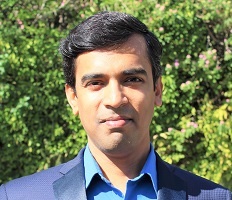
Committee Member

Committee Member

Committee Member · Mentor and Chief AI Architect, UST
Advisor: Dr. Dong Hye Ye. Georgia State University.
Integrates medical images, clinical text and genetics through scalable attention networks and vision-language models. Introduces Spatial Sequence Attention (SSA) for schizophrenia diagnosis from structural MRI, the Multi-modal Imaging Genomics Transformer (MIGTrans) that adds functional connectivity and SNP genomics, and the Multi-Modal Medical Transformer (M3T) for retinal report generation.

Research collaborator, Stanford University
Co-author on work at the NeurIPS 2025 GenAI4Health Workshop.
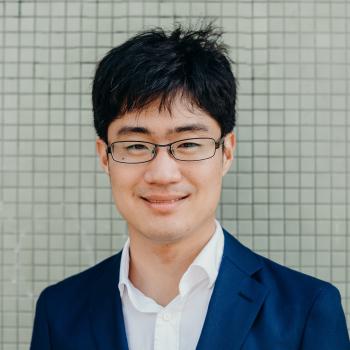
Research collaborator, Stanford AI Lab
AxisSQL, inference-time scaling for Text-to-SQL.

Bachelor's advisor, VFSTR University

Co-author and colleague (VFSTR, TCS, GSU, TReNDS Center)